Apartment vs Independent House: Which Is Better?
Compare apartments and independent houses to understand the differences in cost, privacy, maintenance, amenities and long-term value before choosing the right property for your needs.
Sweta Singh
Real Estate Advisory
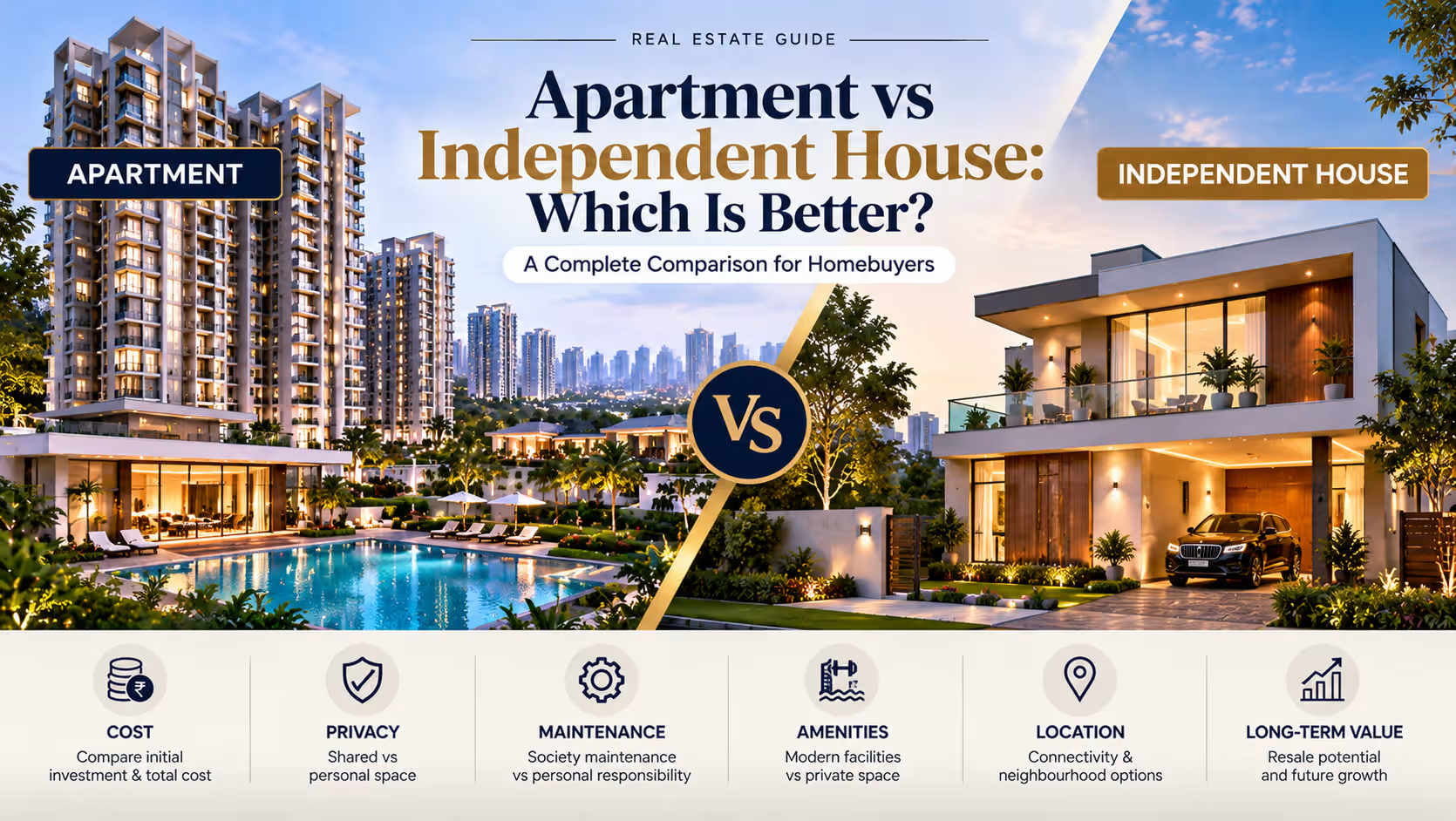
Buying a home is a major financial commitment and the choice between an apartment and an independent house is a difficult one. Each has its own advantages, depending on your budget, lifestyle, family needs and future plans. Differentiating between a apartment and independent house can help you evaluate the options in front of you and choose a property that suits your needs.
1. Compare the Initial Cost of Purchase
The purchase cost is usually one of the first things buyers will consider. Depending on location, size, developer and amenities, apartments may provide more options at different price points.
A freestanding house may mean a larger upfront investment in good locations, particularly where the value of the property is mostly tied up in the land. Prices vary widely, though, and a smaller independent house could be cheaper than a luxury apartment in the same town.
When comparing properties, consider the total purchase cost including applicable taxes, stamp duty, registration charges, parking and other expenses.
2. Know Space and Privacy
One of the major differences between an apartment and an independent house is the privacy and personal space.
Apartments often have common areas, entrances, lifts and facilities with other residents. This can be a good fit for people who like the community living and professionally run common areas.
Independent houses, depending on the property, tend to have more control over the living environment, outdoor space, and home layout. They may appeal to families who want more privacy, more rooms or the freedom to make their own changes to their living space, subject to the rules and permissions that apply.
3. Convenience and Maintenance on a Daily Basis
Managed residential societies may have security, maintenance of common areas, lifts, parking and recreational facilities. Common services and facilities are usually paid for by the residents in the form of maintenance fees.
Owners of independent houses are often more directly accountable for repairs, exterior upkeep, water systems, security, and other property needs. Costs depend on the size and condition of the house and its age.
Buyers should compare not only the price advertized but the ongoing cost of maintaining each property.
4. Assess Amenities & Lifestyle
Modern apartments may even have clubhouses, swimming pools, gyms, landscaped gardens, sports facilities and children’s play areas. These types of amenities can provide convenience without owners having to maintain each amenity.
To independent houses depending on the design of the property private terraces, gardens, courtyards or parking spaces can be attached. But the amenities in an independent house depend on its size, layout and budget.
Your choice should depend on the facilities you will actually use rather than the number of amenities advertised.
5. Look at Location and Connectivity
Location impacts on commuting time, proximity to schools and hospitals, day to day convenience and possible resale demand.
When searching for residential properties in Gurgaon, compare apartments and independent houses in areas like New Gurgaon, Sohna Road, Golf Course Extension Road and other suitable neighborhoods.
Assess access to workplaces, public transport, shopping centers and main roads. Make sure to visit shortlisted properties in person and check the surrounding infrastructure before making a decision.
6. Understand the Advantages of Independent Houses
The benefits of an independent house that buyers may enjoy include more privacy, personal outdoor space and more freedom to make changes to the property, depending on the local rules.
An independent house can also offer flexibility for families with specific space needs. However, buyers should carefully check that they have clear title to the land, the appropriate title documents, any approvals that are required, that the structure is sound and the cost of ongoing maintenance.
Apartments can be great long-term homes, too, particularly for buyers who like amenities and managed residential communities.
7. Which Property Should You Buy?
The best property to buy will depend on your budget, the size of your family, your lifestyle preferences, location and long term objectives.
If you’re a buyer looking for community amenities and less individual maintenance, then an apartment may be a better choice. An independent house is more suitable for people who want privacy, outdoor space and more control over the property.
Before booking either option, check the relevant documentation, approvals, ownership details, total purchase cost and expected maintenance expenses. Shop around. Don't just buy because of looks or sales gimmicks.
Closing thoughts
There’s no one-size-fits-all answer to apartment vs independent house for all buyers. Both can provide comfortable living when the property fits your needs and financial situation.
Consider cost, privacy, upkeep, amenities and location carefully before deciding. Buying a home is a big decision, and doing your homework can help you find a home that fits your lifestyle and long-term plans.
FAQ’s
1. Apartment or stand-alone house: what is better?
It all depends on your budget, privacy needs, lifestyle and maintenance preferences. In apartments, there can be shared amenities and managed common areas while independent houses can offer more privacy and personal space.
2. What are the Advantages of Independent Houses?
Advantages of an independent house are more privacy, outdoor space and more control over property. These benefits depend on the property design, legal restrictions, location, and maintenance needs.
3. Which is cheaper to buy – independent house or an apartment?
It is determined by location, size of the property, value of the land and the amenities. Compare the full purchase price and running costs before deciding which option will work for your budget.
4. How can I select the right property to purchase?
To find the best property to buy think about your budget, preferred location, family needs, connectivity, legal documentation, maintenance costs and long-term objectives. Go and check out the shortlisted properties and weigh up their advantages before you commit.